


From Intention to Action: Lessons from Two ADHD CBT Experts


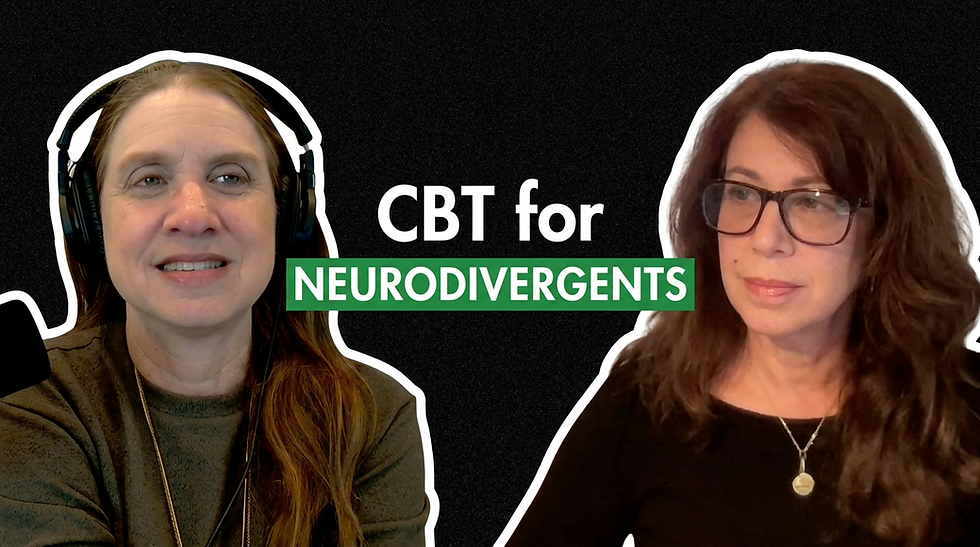
Over the past two weeks, ADHDtime on Air featured two conversations centered on cognitive behavioral therapy (CBT) for ADHD: one with Kristen Baird-Goldman, author of The CBT Workbook for Adults with ADHD, and one with Dr. J. Russell Ramsay, author of Once I Get Started.
What struck me most while preparing these episodes for publication was how much overlap exists between many of the approaches we use to support adults with ADHD. Whether we are talking about coaching or cognitive behavioral therapy, many approaches ultimately help people understand their patterns, challenge unhelpful assumptions, and develop practical strategies for moving forward.
Although both conversations focused on CBT, neither guest presented it as a cure for ADHD or a collection of productivity hacks. Instead, both described CBT as a practical framework for understanding ourselves, making sense of the challenges we face, and building a life that works better with our brains rather than against them.
As someone who spends every day helping adults navigate ADHD, I finished both conversations feeling energized and hopeful. Kristen and Russell approached the topic from different perspectives, yet both returned to many of the same themes: the gap between intention and action, the impact of self-criticism, the importance of self-compassion, and the reality that meaningful change often starts with small, practical steps.
So what exactly is CBT?
Both Kristen and Russell described CBT as a way of understanding the connection between our thoughts, emotions, and behaviors.
Life happens. We encounter challenges, responsibilities, disappointments, deadlines, and transitions. Those events trigger thoughts. Those thoughts influence how we feel. Those feelings influence what we do next.
For adults with ADHD, this cycle can become especially important because the challenge is rarely a lack of knowledge. Most of us already know what we should do. The struggle is often turning that intention into action.
That gap between knowing and doing was one of the central themes of both conversations.

The Intention-Action Gap
One of my favorite ideas from Dr. Ramsay's book is reflected directly in its subtitle: Turning Your Intentions Into Actions.
Adults with ADHD often spend years believing that if they just tried harder, got more motivated, or became more disciplined, they would finally be able to follow through consistently. Yet many of us know from experience that motivation alone is rarely enough.
Kristen approached this same challenge from a slightly different angle. She talked about how our thoughts about a task can create barriers before we even begin. If we approach a task believing we will fail, get it wrong, disappoint someone, or confirm a negative belief about ourselves, avoidance starts to make sense.
In other words, procrastination is not always a time management problem. Sometimes it is an emotional problem.
Perfectionism, Fear, and Self-Mistrust
Another theme that appeared in both conversations was the role of perfectionism.
Many adults with ADHD have accumulated years of criticism, misunderstandings, and negative messages about themselves. Over time, those experiences can create deeply rooted beliefs such as:
"I always mess things up."
"I can't trust myself."
"If I can't do it perfectly, I shouldn't do it at all."
Kristen discussed how many of these beliefs can be traced back to childhood experiences and years of misunderstanding ADHD. Dr. Ramsay expanded on this idea by discussing self-mistrust and what he calls an adaptive mindset.
One concept I particularly loved was his idea of becoming your own defense attorney. Instead of automatically accepting every critical thought as fact, we can pause and ask: If I were defending myself, what evidence would I present?
That simple shift creates space for a more balanced and compassionate perspective.
Self-Compassion Is Not Optional
If there was one lesson I hope listeners took from both episodes, it is that self-compassion is not a luxury for people with ADHD. It is a necessity.
As someone who studies memory, I often remind clients that human memory systems are imperfect by design. We are all going to forget things. We are all going to make mistakes. We are all going to have days when our executive functioning is not at its best.
ADHD simply increases the frequency and impact of many of those experiences.
Both Kristen and Russell emphasized the importance of reducing shame and learning how to respond to ourselves with greater understanding. That does not mean lowering expectations. It means creating conditions where growth becomes possible.
People learn better when they feel safe.
People change more effectively when they feel understood.
And people with ADHD need far less criticism than most of us have already received.
Practice Matters
Another takeaway that stood out to me was the difference between learning and practicing.
Many adults with ADHD love information. We read books, listen to podcasts, watch videos, and collect strategies.
But knowledge alone rarely creates change.
The goal is not to find the perfect strategy.
The goal is to find strategies that are useful enough to keep using.
That may not sound exciting, but it is often where real progress happens.
A Final Thought
What I appreciated most about both conversations was that neither guest promised a cure for ADHD.
Instead, they offered something more valuable.
They offered understanding.
They offered practical tools.
They offered evidence-based approaches.
And perhaps most importantly, they offered hope that things can get better.
Not because ADHD disappears.
But because we can learn to work with our brains more effectively, challenge the stories that no longer serve us, and build systems that support the lives we want to live.
Listen to the Episodes
Want to Learn More?
If this topic resonates with you, I invite you to watch the full episode of ADHDtime on Air, where I share more about living with ADHD and dyslexia, the strategies that helped me become a reader, and the systems I use to reduce memory load and stay engaged with learning.
You can find ADHDtime on Air on YouTube and wherever you listen to podcasts.
For more resources on ADHD, memory, executive functioning, and life transitions, visit ADHDtime, subscribe to the podcast, and join my free Focus on ADHD Books Club.
Books Mentioned in This Article
If you'd like to learn more from these authors, you can find their books here:


Comments